

A driveway can tolerate a little unevenness without affecting how a vehicle moves. An athletic court or running track cannot. For players and runners, subtle changes in elevation, drainage, or surface consistency can affect movement, traction, and the overall usability of the facility.
Here’s why asphalt work for athletic courts requires a more precise approach than standard residential or commercial paving.
Leveling Matters More on Athletic Surfaces
Basketball, tennis, and pickleball courts need an exceptionally consistent playing surface.
Even small undulations can affect how a ball bounces, rolls, or changes direction. FIBA’s outdoor-court guidance states that basketball courts should be perfectly flat for play, while allowing a slight single-plane slope of up to 1%where necessary for drainage. It also recommends that surface undulations under a 3-meter straightedge remain within 5 mm across the playing area.
That level of precision goes well beyond what is normally expected from parking lot paving or a standard driveway. Athletic paving requires careful grading, compaction, and finishing so the completed surface performs consistently across the entire playing area.
Drainage Has to Work Without Disrupting Play
Water is another major concern. A court needs enough slope or drainage infrastructure to move rainwater away without creating a noticeable incline for athletes. FHWA explains that pavement drainage is closely tied to pavement performance and uses “time-to-drain”as a measure of how quickly water leaves a saturated pavement system.
For basketball courts, undulations must be addressed during installation to prevent ponding.
Running tracks have similarly demanding drainage requirements. A properly constructed subbase and effective drainage are fundamental to successful track installation.
Running Tracks Need a Carefully Built Foundation
A running track is not simply a large asphalt loop. Its surface is part of a layered system designed to support repeated athletic use.
Research on athletic and recreational asphalt surfaces identifies subgrade quality, pavement strength, drainage, thickness, mix design, and construction methods as important considerations for facilities such as tennis courts and running tracks.
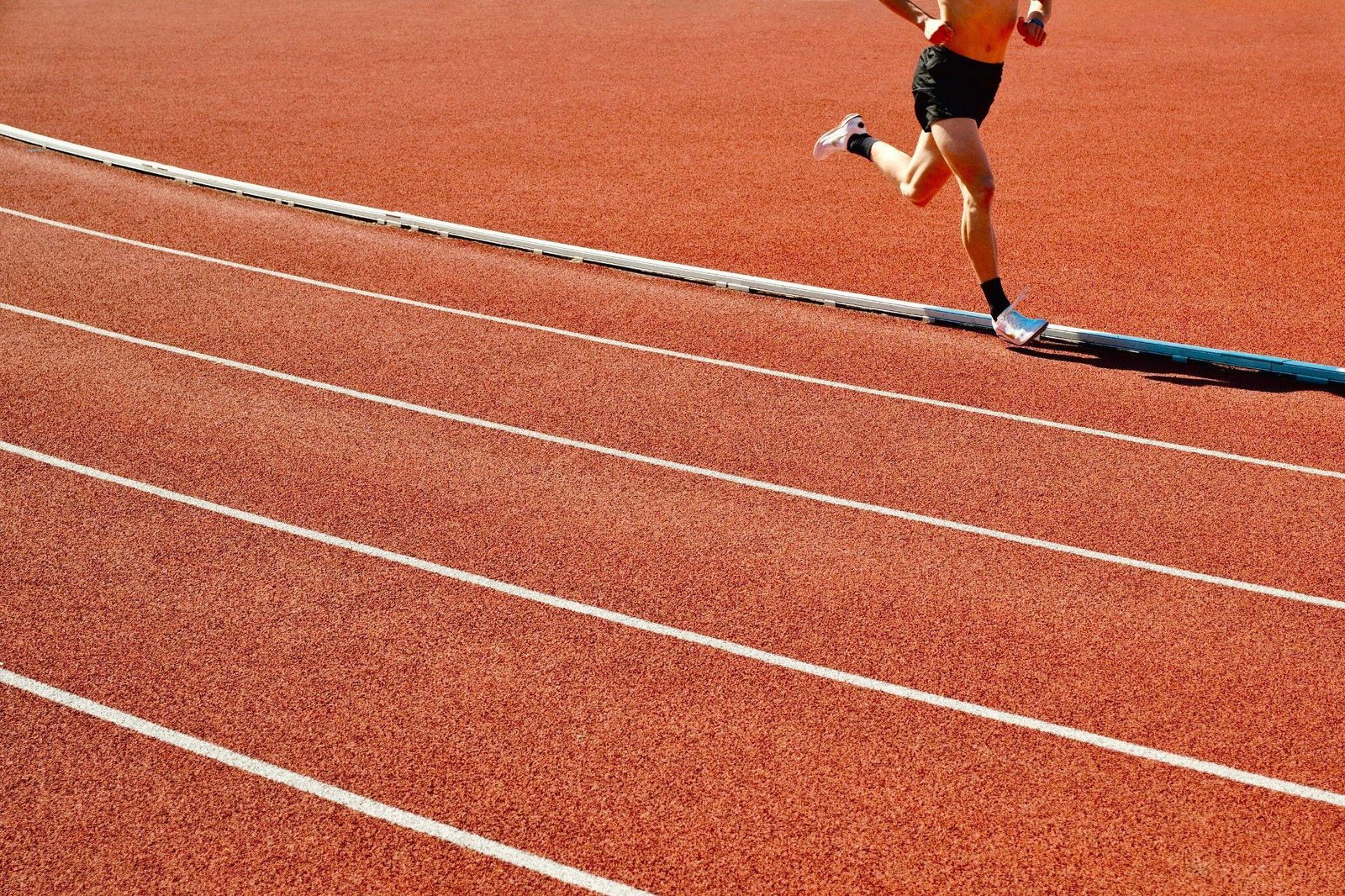
A well-built athletic surface starts beneath the asphalt. Proper grading, drainage, and a stable foundation help courts remain smooth and dependable through regular use and changing weather.
Asphalt Paving By JA Cooper brings more than 30 years of paving experience to basketball, tennis, pickleball, and multipurpose court installations. Our process includes removing old asphalt, preparing the sub-base, grading for drainage, paving, and top-coating to create a durable finished surface.
Whether you’re planning asphalt paving or asphalt repair in Raynham, contact us today and discuss the right paving solution for your athletic facility.